
Successful laboratory construction for precious metal testing hinges on professional fire assay workflow integration, rather than simple equipment stacking. Reliable fire assay workflow integration starts with in-depth site research and operational scenario analysis, ensuring every device, pipeline and operating procedure matches the actual mine-site environment.
This field-oriented service philosophy allows Qingdao Decent Group to deliver stable, compliant and long-serviceable laboratory solutions for global mining clients.
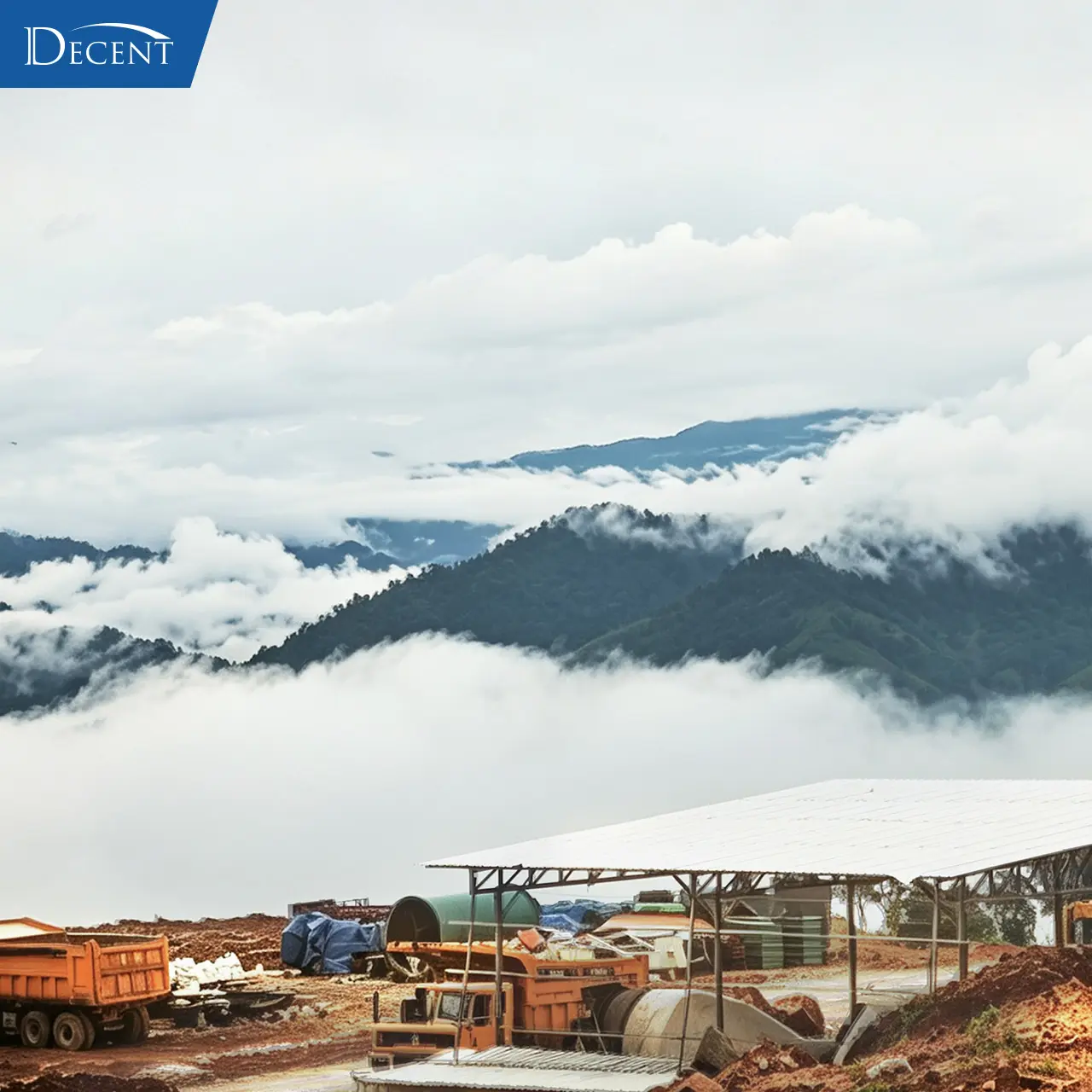
From Site Survey to Sustainable Operation: Standardized Fire Assay Workflow Integration
For global gold and precious metal mining projects, accurate and timely assay data is the core foundation of grade control, production scheduling and responsible resource development. Traditional outsourced sample testing faces long cycles and poor data timeliness, making on-site laboratory construction an inevitable trend for modern mining upgrading.
In 2026, a Laos mining client planned to build a complete fire assay laboratory on-site.
Facing an undeveloped blank venue without pre-set lab structures, Qingdao Decent Group adopted systematic fire assay workflow integration to tailor a fully adapted testing system for the project.
Different from conventional equipment sales models that ignore on-site differences, our core service lies in targeted fire assay workflow integration.
The full service covers on-site condition assessment, spatial layout planning, modular equipment matching, ventilation and dust removal system customization, legacy equipment adaptation and systematic technical training, forming a closed-loop solution from blank site to fully operational laboratory.
Field-First Planning: The Foundation of Effective Fire Assay Workflow Integration
Rather than proposing a standardized equipment package, our engineering team commenced with comprehensive on-site field surveys.
The project site featured blank laboratory space without pre-built functional zones, fixed ventilation pipelines or reserved equipment foundations, which required every layout detail to be newly developed based on actual conditions.
Structural dimensions, airflow patterns, utility access points, and existing client assets were fully documented to form an accurate spatial workflow map.
This rigorous field-first methodology eliminates mismatches between design drawings and on-site implementation, laying a solid foundation for precise fire assay workflow integration.
Every functional partition, equipment positioning and duct routing is formulated based on real spatial data, ensuring the entire testing process is coherent, efficient and compliant from the first day of operation.
|
|
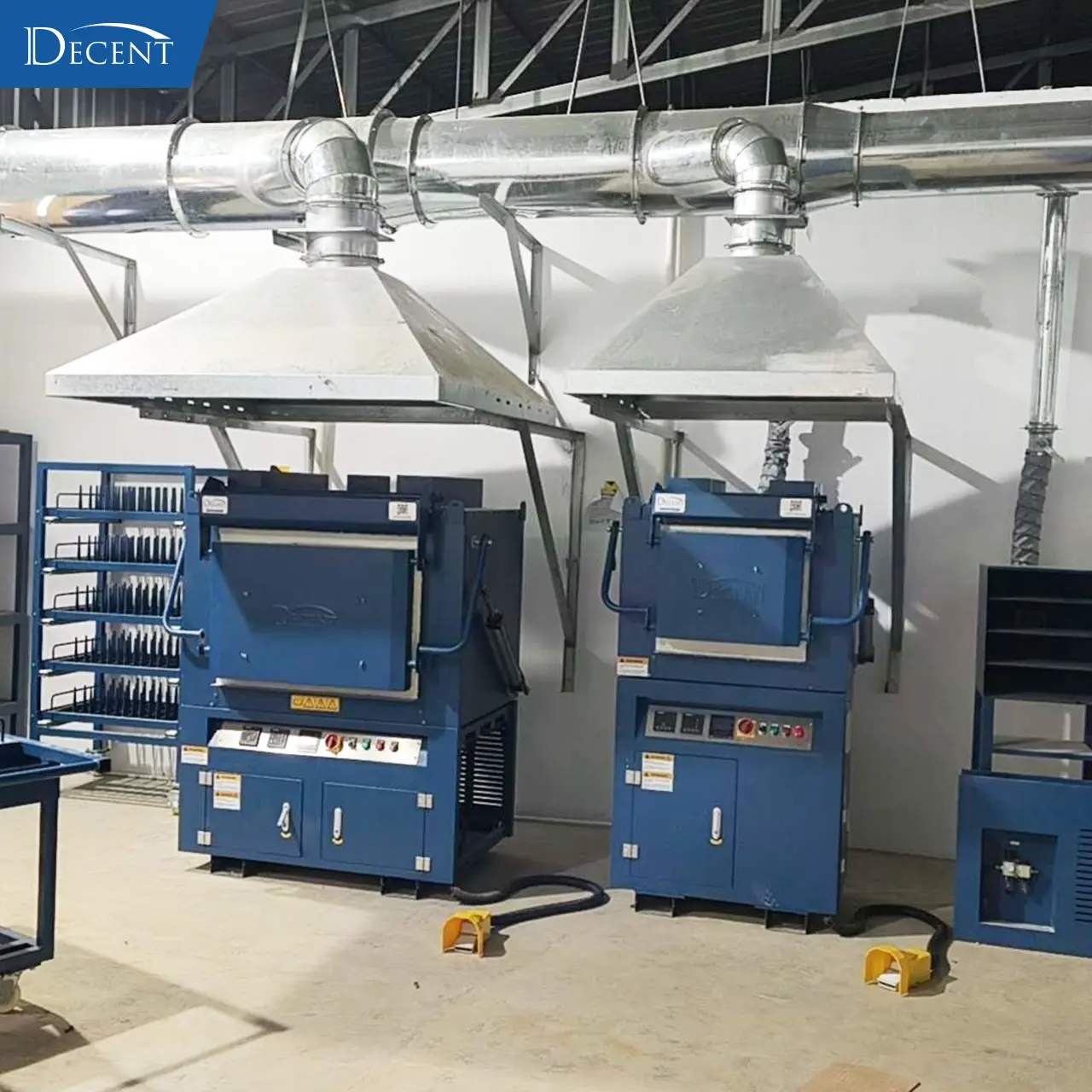
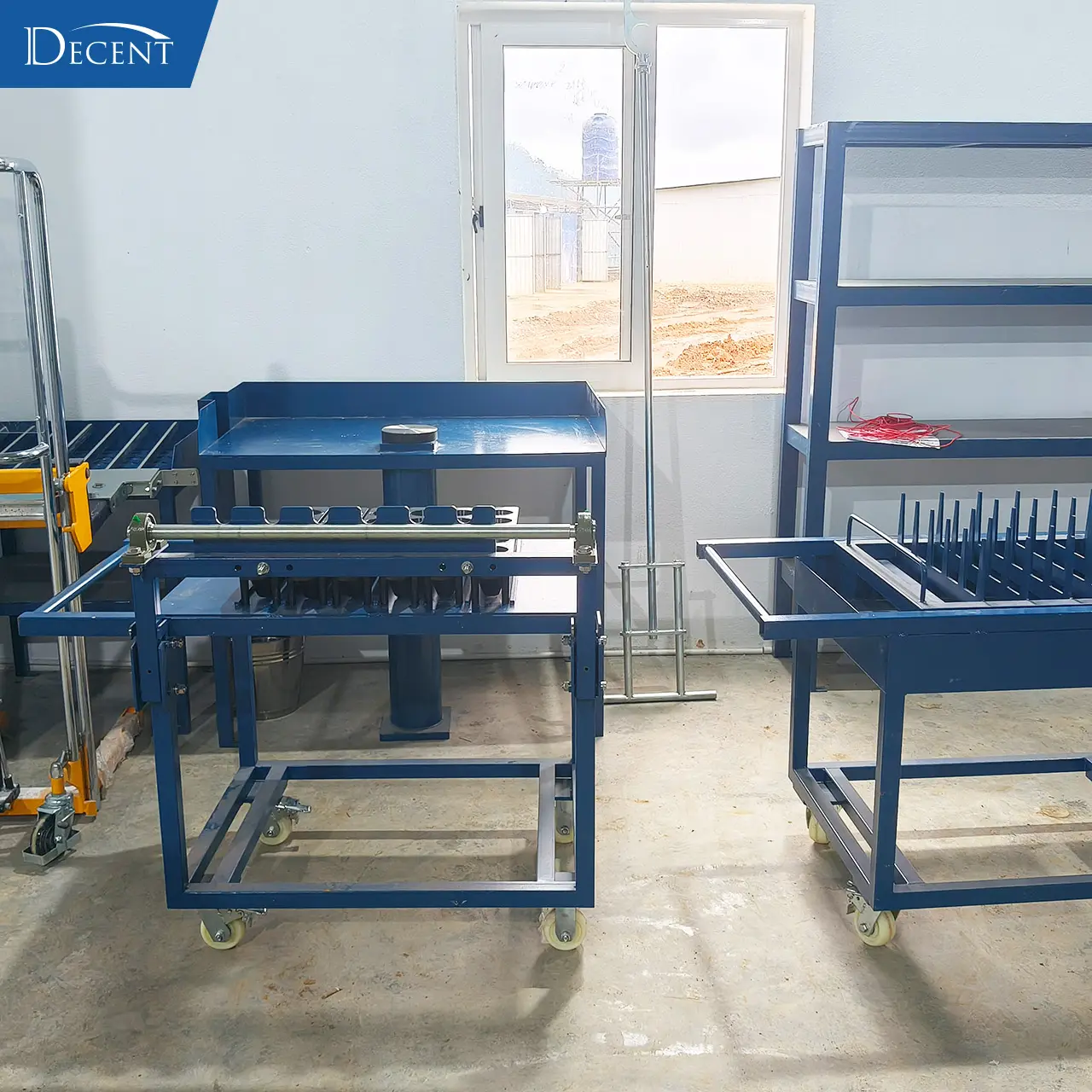
Modular Design for Adaptive Implementation
The laboratory was structured into four coordinated functional zones: sample preparation, high-temperature assay, environmental management, and operator support.
Each zone was equipped with purpose-selected Decent Group systems to form a logically coherent and operationally efficient fire assay workflow:
– Sample intake and classification via the DSs200-1 standard sieve shaker and DP2000 pulverizer
– Homogeneous blending with the DPT36 crucible tumbler
– Precision fusion and cupellation using the DE2536FF fusion furnace and DE50CF cupellation furnace
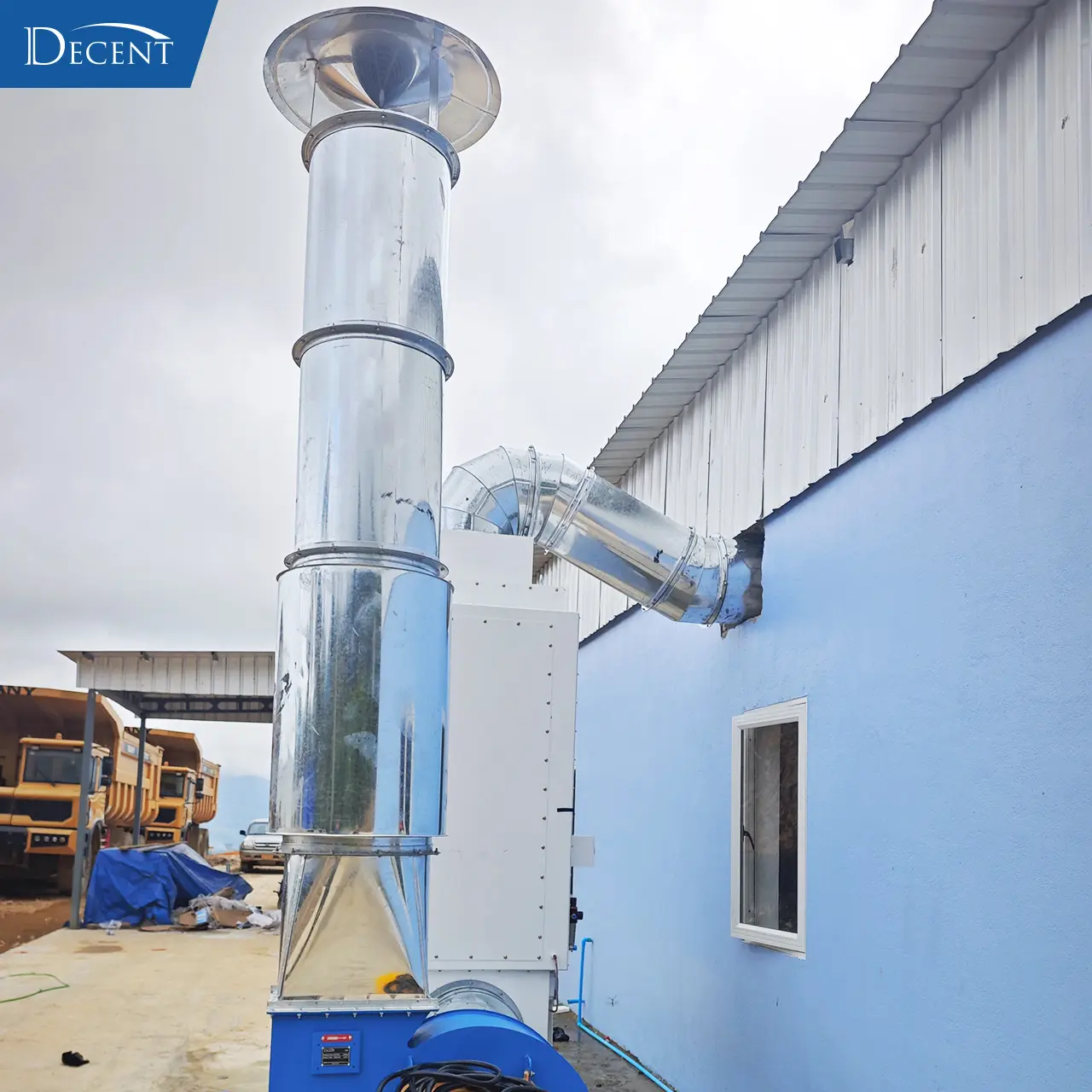
– Source-captured particulate control through the DDC-JZ08 dust collection system with custom ducting and hood assemblies
– Complete safety supporting configurations including fume hood and eyewash station
In addition to deploying brand-new professional fire assay equipment, the team rationally screened, matched and integrated the client’s legacy equipment.
Reasonable compatibility between new and old devices optimizes the overall testing process, further improving the practicability and economy of fire assay workflow integration, and maximizing the client’s existing asset value.
Human-Centered Training & Knowledge Transfer
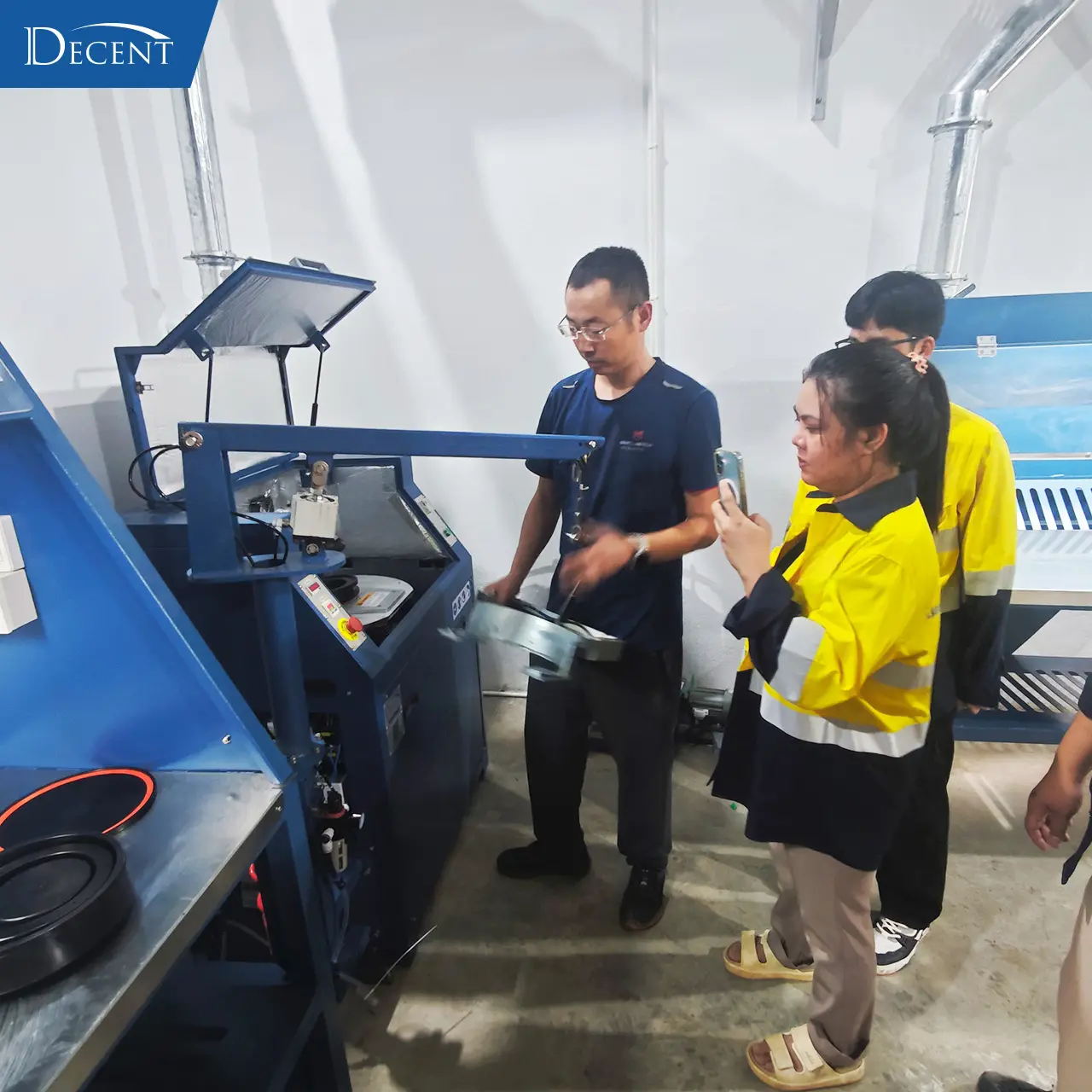
Recognizing that sustainable laboratory operation depends on local expertise, our engineers prioritized visual, hands-on training throughout the project delivery.
The local operation team had limited prior experience with standardized fire assay procedures and faced minor cross-language communication barriers, which made systematic knowledge transfer an indispensable part of on-site implementation.
Considering the local team’s lack of professional fire assay experience and cross-language communication barriers, our engineers adopted visualized and hands-on whole-process training.
Complete SOP guidance and supervised practical operations help local operators master standardized testing procedures.
People-centered capability transfer ensures that fire assay workflow integration can achieve long-term sustainable operational value, rather than only completing equipment installation.
|
|
Aligning with International Standards & Responsible Practice
In the whole process of scheme design and on-site implementation, all layout and system adjustments strictly comply with international laboratory safety and environmental protection standards.
Standardized ventilation configuration, safety emergency facilities and waste disposal mechanisms not only protect operator health, but also make the whole set of fire assay workflow integration more standardized and in line with global responsible mining development requirements.
A Replicable Model for Remote Laboratory Deployment
The completed laboratory now supports consistent, on-site precious metal analysis, reducing reliance on external testing and enabling faster, data-driven mining decisions.
More importantly, the project demonstrates a scalable and mature approach to fire assay laboratory development: survey-led planning, modular system design, adaptive installation, and people-focused training.
This Laos project forms a replicable remote laboratory construction model for the global mining industry.
Qingdao Decent Group’s mature fire assay workflow integration capability can help more overseas mines build independent, efficient and compliant on-site testing laboratories, realizing efficient data output and scientific mining decision support.